Monetary Policy Analysis II | Operations, Strategy and Communication | Phnom Penh
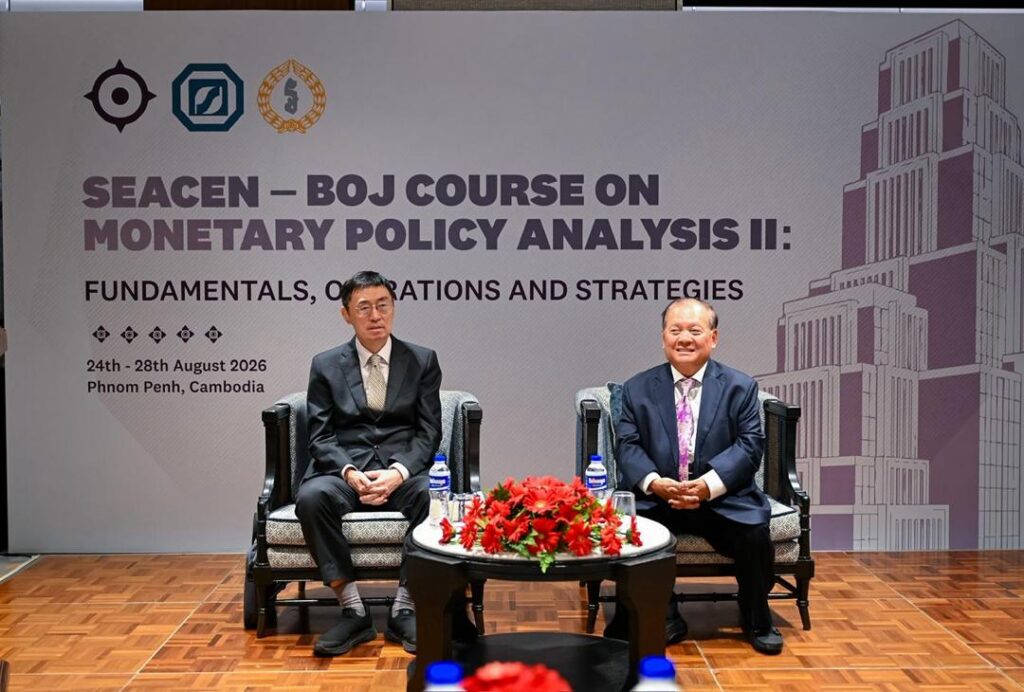
Monetary Policy Analysis II | Operations, Strategy and Communication | Phnom Penh From 24 to 28 August the SEACEN Centre and the Bank of Japan ran Monetary Policy Analysis II: Fundamentals, Operations and Strategies, hosted by the National Bank of Cambodia in Phnom Penh. Across five days, participants worked through policy frameworks and transmission, interest-rate…
New Blog Post on SUARA SEACEN!

Climate Risk Is Financial Risk: Why Asia’s Central Banks Cannot Wait and How They Should Respond by Dr. Cynyoung Park We are pleased to announce the latest blog post from The Centre’s Executive Director Dr. Cyn-Young Park. Climate risks are intensifying while transition progress remains too slow. Against the backdrop, central banks face the practical…
RP1/2026 Interim Workshop
Geopolitical Uncertainty in SEACEN Economies | Interim Research Workshop, Bangkok 9 – 11 September 2026 On 9–11 September The SEACEN Centre convened the interim workshop of its Collaborative Research Project on The Effects of Geopolitical Uncertainty in SEACEN Economies, hosted by the Bank of Thailand. Twelve member central banks presented country studies: measurement and transmission…
New Position Available!

The SEACEN Centre is looking to fill the following role: Director, Financial Stability, Supervision, and Payments. The position offers a unique and exciting possibility to interact with SEACEN member central banks/monetary authorities and their staff at all levels and in a variety of capacities and regional fora, and reports directly to the Executive Director of…
MOU Signing with Korea Asset Management Corporation (KAMCO)
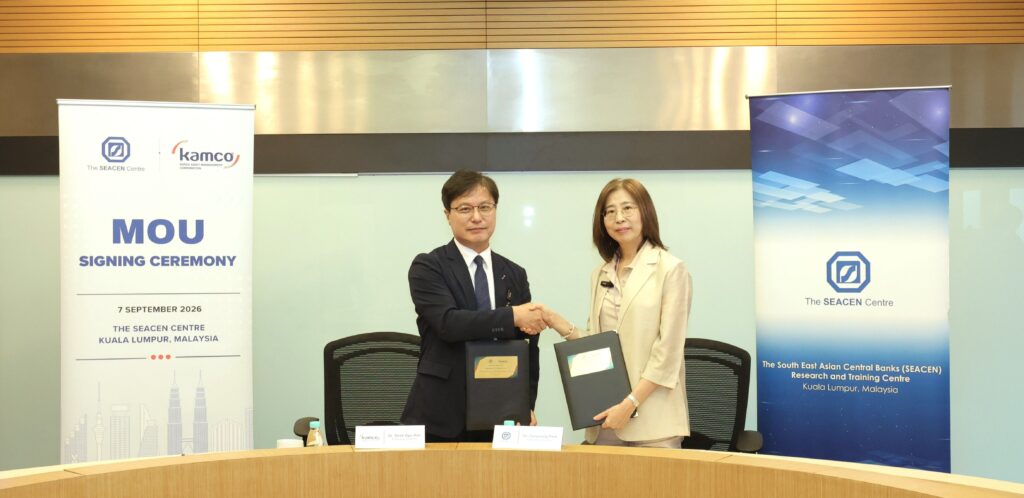
On 7 September 2026, The SEACEN Centre was pleased to host the signing of a Memorandum of Understanding with the Korea Asset Management Corporation (KAMCO) at The SEACEN Centre’s office in Sasana Kijang, Bank Negara Malaysia. The MoU marks an important step in strengthening cooperation and capacity building in the effective resolution and management of…
Publication Update

We are pleased to announce the latest working paper (WP4/2026), authored by SEACEN Executive Director Dr Cynyoung Park, and Prof Kwanho Shin (Korea University). As artificial intelligence (AI) rapidly transforms economies, central banks face growing uncertainty about its effects on productivity, inflation, and economic activity. Using firm-level AI adoption data and industry- and region-level evidence…
New Blog Post on SUARA SEACEN!
We are pleased to announce a new blog post on the SUARA SEACEN Blog: How AI can Reshape Financial Inclusion in Developing Asia by Vacharakoon Jivakanont (SEACEN) and Quentin Dufresne (Banque de France) We are pleased to announce the latest blog post on Suara SEACEN: AI is reshaping true financial inclusion in developing Asia, but…
Scaling Sustainable Finance: From Taxonomies to Action
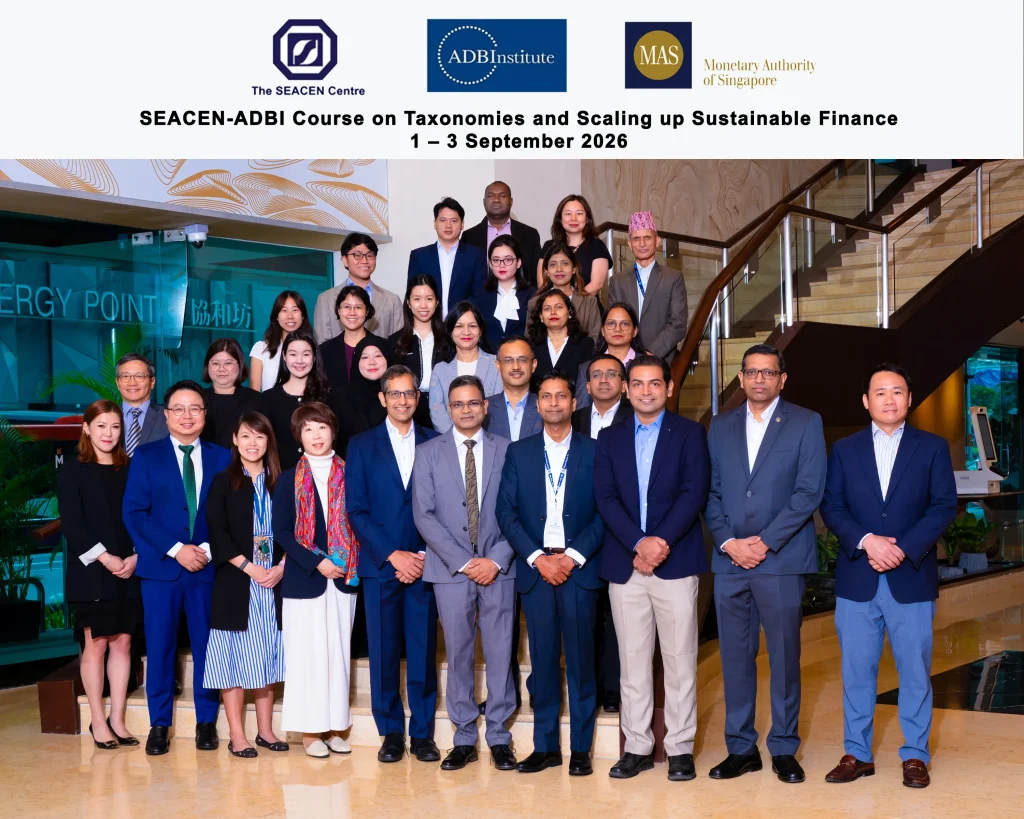
Scaling Sustainable Finance: From Taxonomies to Action Sustainable finance is evolving rapidly — and effective taxonomies, transition frameworks and risk-financing solutions are essential to turn ambition into investment and resilience. The SEACEN–ADBI Course on Taxonomies and Scaling up Sustainable Finance, hosted by the Monetary Authority of Singapore, brings together 33 participants (joining in-person and online)…
New Blog Post on SUARA SEACEN!
We are pleased to announce a new blog post on the SUARA SEACEN Blog: AI Adoption, Regional Productivity, and Inflation: Evidence from Korea and Implications for Monetary Policy by Cynyoung Park and Kwanho Shin We are pleased to announce the latest blog post on Suara SEACEN: This blog examines whether the early adoption of artificial…
Publication Update
We are pleased to announce a collaborative policy brief between The Centre, the Council on Economic Policies and AMRO (ASEAN+3 Macroeconomic Research Office). Authored by Julia B., Aziz Durrani and Cyn-Young Park, this policy brief examines how ASEAN financial authorities can respond to an era of compounding structural challenges, including climate risks, demographic change, technological…